Serenbe is an ecologically responsible 1,000-acre community in the Chattahoochee Hill Country just outside Atlanta. With more than 700 residents living around four village centers, Serenbe maintains more than 70 percent of its land as green space, offering a lovely combination of environmental living with culture, food, and shopping designed for local consumption. Former restauranteur Steve Nygren, the founder of Serenbe, joins Earth911 to discuss his vision and progress toward a new model for communities. He shares how his love of the hill country started with a weekend retreat that has led three generations of his family to live in Serenbe.
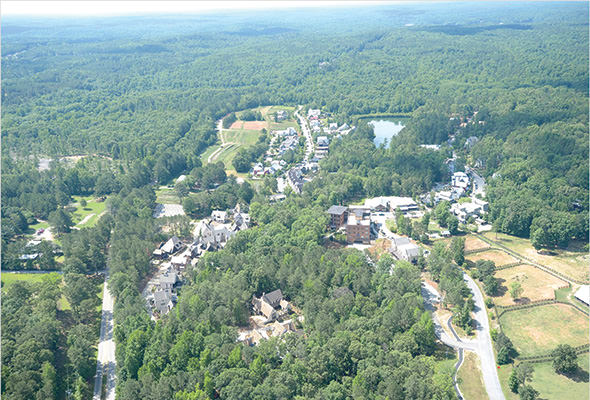
Serenbe, an environmentally friendly community in the Chattahoochee Hill Country outside Atlanta.
Nygren sold dozens of restaurants around the country to pour his attention into building Serenbe, which won the Urban Land Institute’s inaugural Sustainability Award. Bringing a lifetime of hospitality experience to the project, Nygren and his company have assembled stores, restaurants, and a variety of home designs that range from large single-family houses to small studio flats that allow for all incomes to live and work in Serenbe. The community also provides theater, art programs, and other programs for residents. Since it is so near Atlanta, Serenbe blends rural life with the convenience of a nearby urban center.
We discuss who finds Serenbe to be an ideal home, the challenges of building a town from scratch to coexist with nature, and how Serenbe supports small businesses that locate in the community. Nygren also shares how the construction of homes in Serenbe lowers power and heating requirements by 30 percent or more. You can visit Serenbe to see for yourself what natural living can look like.
Join the conversation and share your thoughts with the community in our Earthling Forum.
- Subscribe to the podcast on iTunes.
- Follow the podcast on Spreaker, iHeartRadio, or YouTube.
You Might Also Like…
Earth911 Podcast: Steve Nygren, Founder of Eco-community Serenbe
December 30, 2019What You Need to Know About Renewable Energy
December 30, 20194 Quick & Healthy Holiday Cocktail Recipes
December 30, 2019The post Earth911 Podcast: Steve Nygren, Founder of Eco-community Serenbe appeared first on Earth911.com.
from Earth911.com https://ift.tt/2ZBjnnr https://ift.tt/2ZzMis9
Comments
Post a Comment