Have you ever been one of the unlucky souls to show up at the grocery store or post office only to discover you’re wearing an added accessory — a used dryer sheet? Unsightly out of the dryer, traditional dryer sheets are also quite wasteful. Here’s how …
By design, dryer sheets are single use, creating unnecessary waste as well as added expense to your monthly budget. Traditional dryer sheets can also contain harmful chemicals including ingredients listed only as “fragrance.” Is there an alternative? Absolutely! Wool dryer balls.
This article contains affiliate links that help fund our Recycling Directory, the most comprehensive in North America.
Wool Dryer Balls to the Rescue
Natural wool dryer balls contain none of the toxic chemicals commonly found in traditional dryer sheets, yet accomplish the same end result — soft, static-free clothes. If you like dryer sheets for the fragrance (remember those harmful chemicals), you can add a nontoxic scent your drying laundry naturally with dryer balls. Just add a few drops of your favorite essential oil to the wool balls before you toss them in the dryer. (We recommend lavender.)
In addition, wool dryer balls cut down on drying time, so you save time, energy, and money while getting rid of static cling and wrinkles. The wool literally pulls moisture out of your (drying) clothes. They should also last for thousands of loads of laundry (that’s a lot of socks!).
The number of wool dryer balls you might need depends on the size and makeup of your dryer load. For a small load of delicates, try using two, three, or four dryer balls. Laundry piled a mountain high? Try using a half dozen or more. There is really no limit to how many wool dryer balls one could use. Your dryer has always wanted to be a juggler, so go ahead — make its day.
Make Your Own Wool Dryer Balls
Ready to give them a try, but you’re more of a DIY-er? No problem. The following infographic from Fix.com walks you through the steps of making your own wool dryer balls.
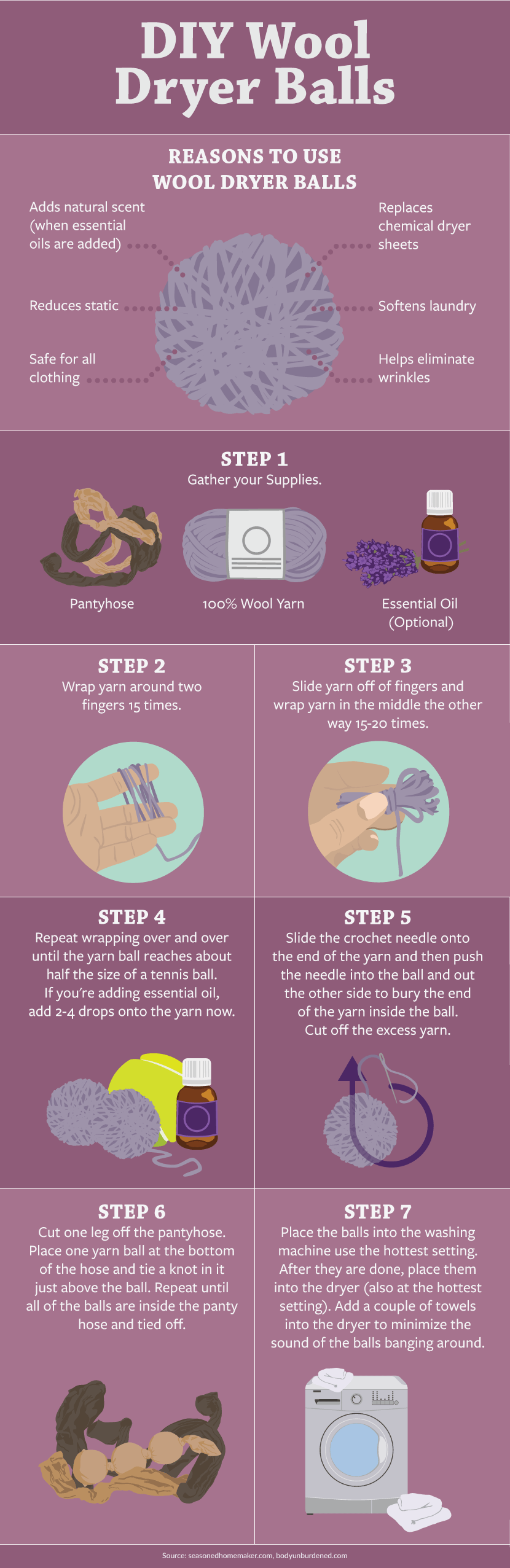
Source: Fix.com Blog
A Final Note About the Felting Process
Keep your DIY wool dryer balls wrapped in the pantyhose only during the felting process. Blogger Betsy Jabs from DIY Natural notes that you may need to run the pantyhose-covered balls through three or four wash and dry loads to get them to “felt” well. (Go ahead and toss in towels and other items you can wash and dry at the hot setting.) Once the felting process is done, cut away the pantyhose and enjoy your homemade wool dryer balls!
Originally published on February 23, 2015, this post was updated in January 2020.
You Might Also Like…
Earth911 Quiz #71: Know Your Carbon Impact Every Day
January 30, 2020Baa, Baa Dryer Sheet, Have You Any Wool? Laundry, Meet Wool Dryer Balls
January 30, 2020Peecycling: From Liquid Waste to Healthy Crops
January 29, 2020The post Baa, Baa Dryer Sheet, Have You Any Wool? Laundry, Meet Wool Dryer Balls appeared first on Earth911.com.
from Earth911.com https://ift.tt/2U9HglA https://ift.tt/3aQhrg6
Comments
Post a Comment