Ah, fall. Back to school, sweater weather, and warm drinks. Those brightly colored leaves are beautiful on the trees, but they lose their appeal when they start falling to the ground. Now, last week’s kaleidoscope of natural color become this week’s tedious yard work. But even fallen leaves have value. Here are five do’s and a don’t for dealing with autumn leaves.
Don’t Blow It Off
Don’t use a leaf blower. Simply blowing the leaves off your property into someone else’s is just rude. Blowing them into the street will clog storm drains and cause flooding when it rains. But even if you blow your leaves into neat piles, you’re still creating a lot of unneighborly noise and pollution.
Curbside Yard Waste
Leaves are not garbage. If your city offers yard waste collection service, use it. It’s the same amount of work to rake your leaves and bag them (or scoop them into a bin) for yard waste pickup as it is for garbage. Leaves thrown in the garbage usually go to a landfill, where organic matter contributes to landfill gas, the third largest source of human-related methane emissions in the U.S.
Yard waste collection programs send fallen leaves into large-scale composting facilities, where they and other organic waste is recycled into a nutrient-rich soil supplement.
Home Compost
If your community doesn’t have municipal composting — or you just don’t want to pay for the compost made from leaves you paid to have hauled off last autumn — you can compost leaves yourself. This is the most labor-intensive option, but also the most satisfying. Compost bins can be built in a weekend and the basics of composting are simple to learn. By next spring, you’ll have a bin full of compost to feed your flowers.
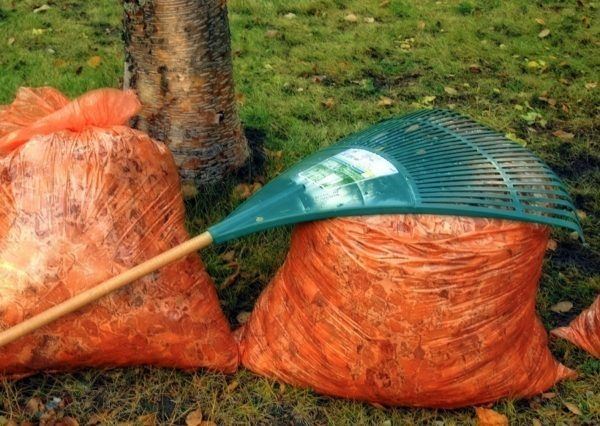
Don’t put your leaves in the garbage; they make an excellent mulch for flower and vegetable beds. Photo: werner22brigitte, Pixabay
Mulch Your Flower Beds
Or, you can skip the bins and go straight to the beds. Unlike animal manures and woody debris, leaf litter doesn’t have to be composted before it can contribute to soil health. Leaves make an excellent free mulch for flower and vegetable beds. Just rake leaves onto your planting beds, leaving space around the stems of growing plants to avoid crown rot. You can pile the leaves up to four inches deep to make a cozy winter blanket for your plants’ roots. To keep dried out leaves from blowing around, you can run over them with a lawn mower before spreading them. Alternatively, keep your planting beds moist through the winter and the leaves will simply decay.
Mulch Your Lawn
Mulching, the easiest option, is also green and good for your yard. Ignore the leaves on your lawn. Continue mowing your lawn as usual until both leaf fall and grass growth have ended for the year. Your lawnmower will chop the leaves into pieces not much bigger than the leaf clippings that you already grasscycle. Leaf and lawn clippings will both break down quickly in the lawn, feeding the soil for next year.
Feature image by Kapa65 at Pixabay. This post was originally published on September 21, 2018.
You Might Also Like…
What To Do With Autumn Leaves
September 30, 2020Your Food Waste Has Global Impact
September 29, 2020We Earthlings: Get the Plastic Out!
September 29, 2020
The post What To Do With Autumn Leaves appeared first on Earth 911.
from Earth 911 https://ift.tt/2G9L29G https://ift.tt/3jb2hWx
Comments
Post a Comment