As we try to reduce our environmental impact, it’s easy to forget that smaller items — like pens and pencils — can add up to a lot of waste.
How many disposable ballpoint pens do you have cluttering your drawers, desk, or pencil holders? Do you throw away pencils when they’re only half-way used or when the eraser wears out?
Americans toss 1.6 billion disposable pens annually. These plastic pens end up in landfills and as litter. Some of this plastic waste makes its way to our waterways, where it breaks down into microplastics, polluting our water and harming ocean life. And while it doesn’t seem like a little pencil would use much wood, did you know that over 82,000 trees are cut down annually to produce pencils?
Eco-Friendlier Pens and Pencils
We do have eco-friendlier alternatives. Many refillable fountain pens come with their own ink refill converter (or you can purchase one separately) so you can refill from a glass ink container rather than disposable plastic cartridges. And if a fountain pen isn’t for you, check out Paper Mate’s biodegradable pen, or use a refillable ballpoint pen that accepts refill cartridges to reduce your waste.
You can find more sustainable pencils made out of recycled newspaper instead of wood. Or you could try a refillable stainless steel mechanical pencil. Unfortunately, most lead refills are packaged in plastic.
Our Wasteful Use of Pens and Pencils
Get an idea of our wasteful use of pens and pencils from this infographic from Quality Logo Products. And if you’re looking for gifts for clients or employees, they offer customizable fountain pens and recycled newspaper pencils in bulk.
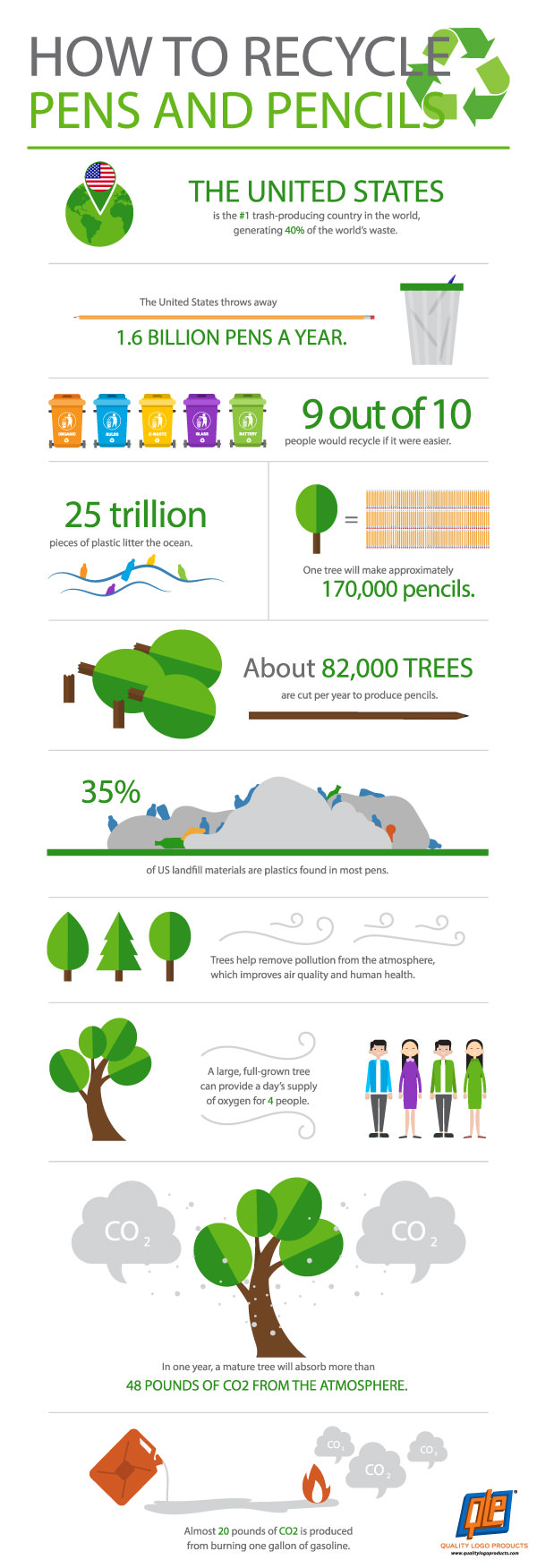
Infographic courtesy of Quality Logo Products
Feature image by monicore from Pixabay
Editor’s note: Earth911 teams up with affiliate marketing partners to help fund our Recycling Directory. If you purchase an item through one of the affiliate links in this post, we will receive a small commission.
Originally published on November 12, 2019, this post was updated in October 2020.
You Might Also Like…
Infographic: Pens and Pencils by the Numbers
October 29, 2020Earth911 Quiz #28: Who Said It? Environmental Quotes To Remember
October 29, 2020Fall Farm-to-Table Brunch Recipes
October 29, 2020The post Infographic: Pens and Pencils by the Numbers appeared first on Earth 911.
from Earth 911 https://ift.tt/2Q9GkeT https://ift.tt/3e8dcyy
Comments
Post a Comment