In a world largely driven by consumerism, it’s important to realize the power we each have to help the planet by spending and buying less. Our personal habits as consumers can help make a positive change or inadvertently create more waste in the world. Unfortunately, one spending pattern that has picked up momentum recently is the contradictory “spaving” phenomenon.
Spaving, or “spending to save,” is when people end up spending more money and creating more waste in an effort to save money. Encouraged by advertisers, this spending behavior might seem to help your wallet, but it only lines the pockets of big business. In a survey run by Mint.com over the summer of 2020, 58% of Americans admitted to spaving.
For most of us, 2020 has brought unpredictability, sparking behavior like panic buying in bulk or needlessly purchasing items to get a discount. When money is tight, the trap of buying large quantities of items for a lower price is enticing. But what happens to the wasteful excess?
You might think, what harm does it really cause to have a few extra things crowding your closet if you paid less for each item? Accumulating more stuff than you need might not seem too bad at first, but it’s a slippery slope.
Sure, price club memberships can be great in some cases. And buying in bulk has its purposes when it’s done strategically. But when they aren’t, these practices are far from sustainable. Money saved ends up being money wasted when unneeded purchases end up collecting dust, expiring, and clogging up landfills.
Thankfully, spaving is easy to combat with the right mindset. Evaluate your purchases before you click “proceed to checkout.” Don’t give in to pop-up ads to buy more when you’re stressed or in a rush. Avoid impulsive purchasing decisions when you’re shopping. Your wallet and the environment will thank you.
When you err on the side of minimalism, you can benefit from a clearer, less cluttered space and enjoy a more sustainable approach to life. When you do plan to splurge, buy from a local, eco-friendly small business to make your dollar really count.
As we move towards the holiday season when advertisers encourage us to buy more than we need, it’s a good time to assess your purchasing habits. Are you spending more money — and creating more waste — in your efforts to save? The following infographic from Mint.com alerts us to some of the money-saving gimmicks that can trick us into making wasteful spending mistakes.
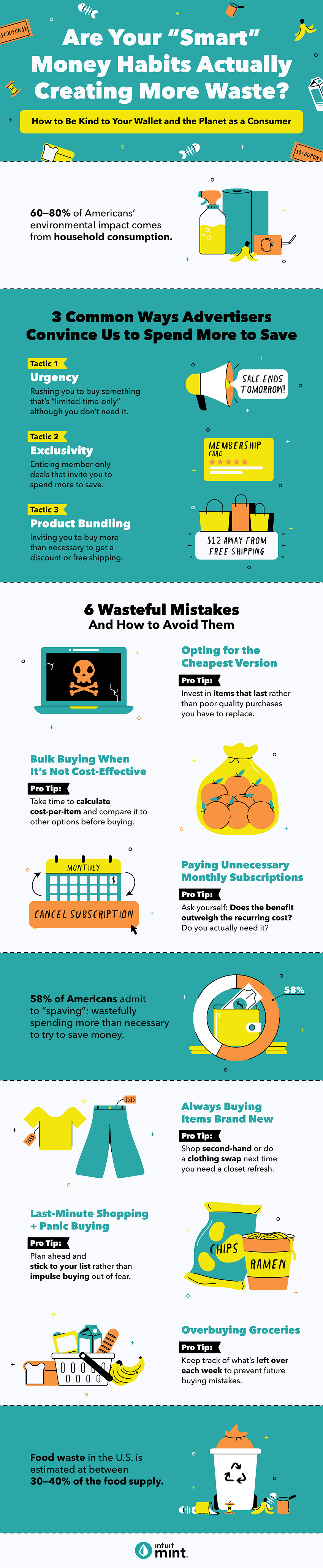
Infographic: Mint.com
About the Author
Gabrielle Gardiner is a writer who is passionate about creating informative, fun, and shareable content. Her work spans a wide range of topics, including various pieces on how to live a more eco-friendly and mindful life.
You Might Also Like…
The “Spaving” Dilemma: Avoid These Wasteful Spending Traps
Nov 26, 2020Earth911 Quiz #49: Bin It?
Nov 26, 2020Focus Some Love on the Planet: GivingTuesday
Nov 25, 2020
The post The “Spaving” Dilemma: Avoid These Wasteful Spending Traps appeared first on Earth 911.
from Earth 911 https://ift.tt/2JfVY6Q https://ift.tt/3mm7Ral
Comments
Post a Comment