Paper recycling might seem like the sort of thing best left to the recycling experts, but did you know you can recycle your own paper at home without too much trouble? You’ll be able to eliminate some household waste — like junk mail, used printer paper, or old newspaper — and create something unique and handmade at the same time.
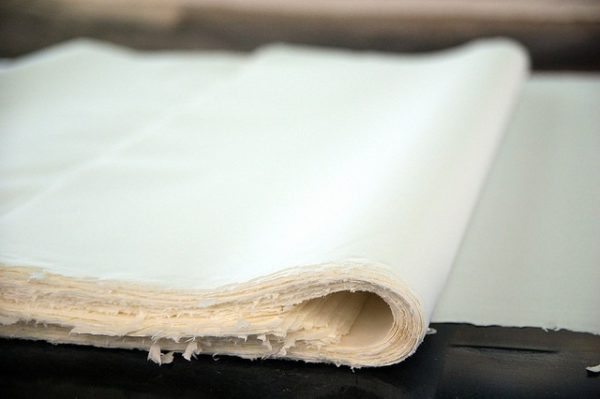
Paper recycled by hand works well for making cards and gifts. Photo: Flickr/myhsu
What You’ll Need
- Waste paper (almost anything will work — just avoid glossy paper like magazines)
- Water
- A blender or food processor
- An old picture frame or wood to make your own frame
- Mesh or screen (together with the frame, this will make your paper mold)
- Felt, cloth, or sponge
- A rectangular bin or pan to hold water (it needs to be bigger than your frame)
- Decorations like dried flowers, confetti, or seeds (optional)
Plenty of instructions exist online for how to make your own paper. Make Something offers a video tutorial and Instructables has written instructions with photos. To give you a general sense of the process, we’ll summarize how it works.
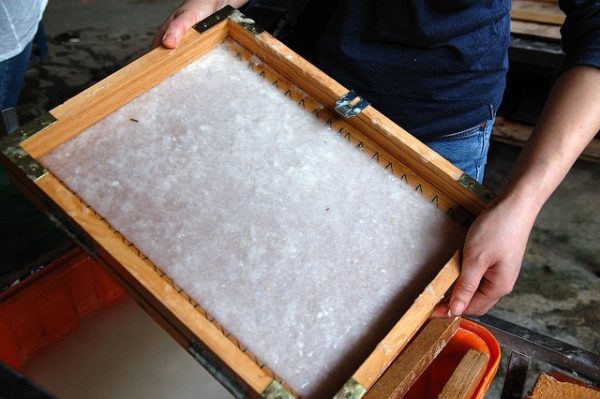
A mold made of a frame and screen helps form each sheet of paper. Photo: Flickr/myhsu
Main Steps
1. Tear the paper into small pieces and put into a blender with warm water. Blend until the mixture becomes a fairly smooth pulp. If you want to add specks of color, add pieces of colored paper at this point, then blend just a bit.
2. Assemble your “mold.” Attach your screen to your frame using duck tape, staples, or any other method that will keep the screen affixed to the frame’s edges. You’ll use your second piece of screen later in the process.
3. Put your mold in your bin or pan of water, then pour the pulp into the mold. (If you lift the mold up, the pulp should cover the screen.) At this point, you can add decorations like dried flowers or grass, a splash of paint, or even seeds to make plantable paper. Be sure to add a little more pulp to cover the decorations so they adhere to the paper.
4. Lift the mold out of the water, and place the second piece of screen on top of the pulp. Use a cloth or sponge to press out excess water.
5. Lift the screen and the paper should come right up with it. Now invert the screen on a towel (pulp side down) and dab the sponge or cloth on the screen side to press out more water.
6. Then lift the screen off of the paper and set your paper on a towel to dry. You can air dry it, or cover it with a paper towel and press it with an iron to speed up the drying time.
Check these steps out in action, courtesy of Storm the Castle:
Want to know more? Learn how paper gets recycled or visit paperrecycles.org.
Originally published on March 8, 2015, this article was updated in December 2020.
You Might Also Like…
Earth911 Quiz #40: Be a U.S. Recycling Trivia Champion
Dec 31, 2020Simple Steps To Recycle Your Own Paper
Dec 31, 2020Maven Moment: A New Slow Cooker
Dec 30, 2020
The post Simple Steps To Recycle Your Own Paper appeared first on Earth 911.
from Earth 911 https://ift.tt/3hxlTEj https://ift.tt/3pDe3M9
Comments
Post a Comment