Electric vehicles (EVs) have made huge technological strides since they were first introduced, and they’re more popular than ever before. Yet some drivers are still hesitant to make the switch from traditional gas-powered cars, in large part due to misconceptions that EVs still suffer the same shortcomings they did in their earlier years. While electric cars do, indeed, have their downsides, there are also considerable benefits to owning one.
6 Benefits of Electric Cars
The benefits of owning an EV arguably outweigh any cons — from spending less money in the long run to making fewer trips to the repair shop. And it doesn’t stop there.
1. They’re easier on the environment.
For many motorists, simply knowing that electric vehicles are better for the environment is reason enough to make the investment. EVs don’t even have an exhaust system, meaning they have zero emissions. And since gas-powered vehicles are large contributors to greenhouse-gas buildup in the earth’s atmosphere, making the switch to an electric car can help contribute to cleaner air and a healthier planet.
2. Electricity is cheaper than gasoline.
Americans pay an average of 15 cents per mile driving gas-powered cars, which really doesn’t seem like much — until you compare it to the fact that many EVs run at one-third of that cost, given that electricity is significantly less expensive than gasoline. And since you’ll likely charge your electric car in your garage most of the time, installing solar panels on your home can save you even more money on powering both your residence and your EV.
3. Maintenance is less frequent and less expensive.
Since electric cars are, well, electric, they don’t run on oil and therefore don’t necessitate oil changes (or any other maintenance related to combustion engines, for that matter). Another upside? The brakes on an EV typically don’t wear as quickly as those on a conventional car, which means even more savings for you.
4. They’re very quiet.
If you live next to a busy road or have simply driven in rush-hour traffic, you know how noisy conventional cars can be, even if it’s just the hum of smaller engines. EVs, on the other hand, are practically silent. They’re so quiet, in fact, that many legislators in the U.S. have proposed the installation of noise-making devices to alert pedestrians that they’re nearby.
5. You’ll get tax credits.
If you’re the original owner of an electric vehicle, you’ll likely receive a tax credit just for helping to lessen your impact on the environment by driving a zero-emissions car. That tax credit can be as high as $7,500, depending on the make and model. There is, predictably, fine print when it comes to EV tax credits, so be sure to ask a tax specialist any questions you may have. (Note: The U.S. federal EV credit starts to phase out for a manufacturer’s vehicles when at least 200,000 qualifying vehicles from that manufacturer have been sold for use in the U.S.)
6. They can shorten your commute time.
Driving an EV means you have the privilege of using the HOV lane (aka the “carpool” lane) any time of day — even if you’re riding solo. If you live in a high-traffic area, this not only saves you so much time, but also a decent amount of sanity. Talk about a win-win.
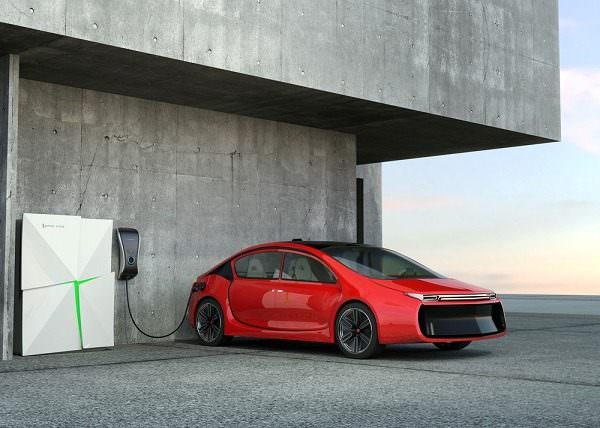
Photo: Shutterstock
5 Drawbacks of EVs
Of course, nothing is perfect, and electric cars are no exception. There are a few important factors to consider before signing on the dotted line at the dealership.
1. Most EVs have pretty short ranges.
Although EV range is constantly improving, it’s still one of the main pain points for consumers deciding between electric and conventional. On a full charge, most electric models are limited to a range of 60 to 100 miles, but a small minority of models can go between 200 and 300 miles per charge. (2020 update: EV range continues to improve, with figures spanning 110 miles for the 2020 Mini Cooper Electric to as high as 520 miles for the 2021 Tesla Model S.)
2. Recharging can take a while.
Compared to the few minutes it takes to fill up a conventional car at the gas station, recharging your EV is a much more significant time investment. While most electric car engines take about four hours to reach a full charge, some take a whopping 15 to 20 hours. However, there are kits available that reportedly cut charging time in half.
3. They’re a large initial investment.
If you’ve never shopped for an EV before, you might experience a bit of sticker shock upon beginning your research. Even the more affordable electric car models start in the $30,000 to $40,000 range, while luxury models creep into the $80,000s and upward. Until technology advances and becomes less expensive to produce, consumers can expect to pay between $10,000 and $50,000 more for an EV.
4. Charging station availability is inconsistent.
Perhaps you live in an area where electric vehicles are relatively common, and so there’s a wide availability of EV charging stations for your convenience. But say you’re on a road trip or visiting family in a more suburban or remote area — what happens if you need to charge up? Luckily, as the popularity of electric cars grows, so, too, do the charging stations they require. But for now, the lack of availability is another major grievance for consumers.
5. There are fewer choices.
There’s no denying that there’s a greater variety of electric cars than ever before, and there’s no sign it’s going to stop growing, either. But the fact remains — there’s just not as much to choose from when it comes to the aesthetics of your EV, especially when compared to how much you can customize conventional vehicles. On the upside, this will definitely change as EV prevalence continues to grow.
About the Author
Stephanie Braun is a director of Auto Product Management at Esurance, where she is responsible for designing the company’s auto product lines and managing telematics programs like DriveSense Mobile. Stephanie has 11 years of experience in the industry, focused primarily on product design and launch, pricing, and product innovation.
Feature image courtesy of Shutterstock
This article was originally published on May 3, 2017.
You Might Also Like…
Earth911 Podcast: Sustainable Home Shopping With Loop
Dec 30, 2020The Biggest Pros and Cons of Electric Vehicles
Dec 30, 2020Tips for Sustainable Outdoor Dining This Winter
Dec 29, 2020
The post The Biggest Pros and Cons of Electric Vehicles appeared first on Earth 911.
from Earth 911 https://ift.tt/3o06zT4 https://ift.tt/3aS12dr
Comments
Post a Comment