As I sit with my burger — succulent, greasy beef slathered in ketchup, mayo, and gooey cheese, I come to a brutal realization. I’m a vegetarian.
The false promise of New Year’s Resolutions
Fewer than 25% of people stick with their New Year’s Resolutions after the first 30 days. And fewer than 8% actually achieve them.
More often than not, we self-sabotage without realizing it. We aim for an overly ambitious goal and kick ourselves for not reaching it. The thing is: we don’t actually prepare to succeed.
This is why we keep making the same New Year’s resolutions and keep failing to meet them.
Maybe it’s time to change.
Sabotage self-sabotage
My mentor once said that change is one simple action at a time.
Reflecting on this, I noticed that the days I cram full of tasks often end up with little accomplished. However, if I focus on just one task, I end up being more productive.
The lesson? Start simple. Break each change down to its smallest part. It’ll take longer, but the change will also last longer — and that’s the real goal, isn’t it? You’re not racing anyone here. Try Earth911’s meatless breakfast and lunch approach to building a plant-based diet.
This brings me to my next point: Don’t pay attention to what anyone else is doing. These comparisons are the fastest way to sabotage your own progress. I say this as someone who is a hypercritical, highly competitive perfectionist: Nothing is perfect.
Source your motivation
Know why you’re making the change to a plant-based diet. Why did I choose vegetarianism? The simplest — and most reductive answer — is guilt.
Being a posthuman scholar, animal theory (or animal studies) is a very close neighbor. Every time I popped in for a visit, I ran into Jeremy Bentham and his maddening question: Can they suffer?
I realized that — for me — animals fall into the category of “people,” and I think we can all agree: You don’t eat people. (This was part of a larger realization about myself and my philosophies, but that is an entirely different article.)
Celebrate your wins
When I finish this article, do you know what I get? Cake. Rich, gooey, chocolatey cake.
Some might say you’re bribing yourself into good behavior, but so what? Reward yourself with something good. Achieving things is hard.
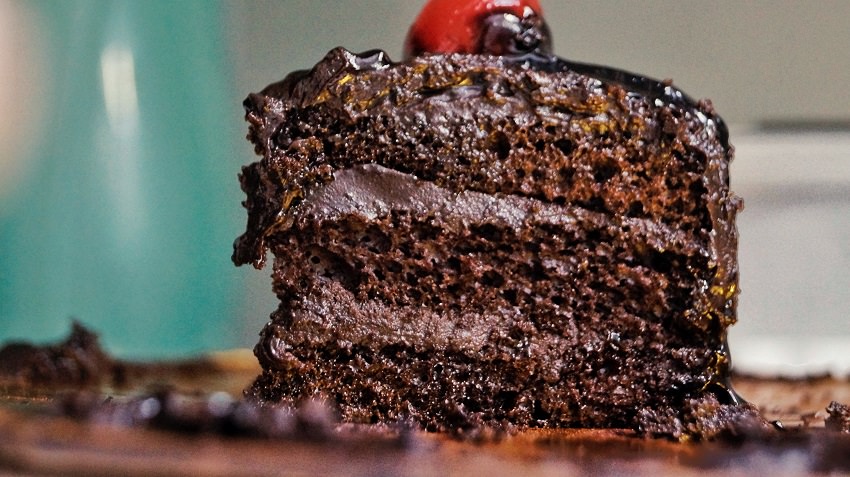
Photo: Ayesha Firdaus, Unsplash
Find your process
You don’t think about the steps for brushing your teeth; you just do them. We naturally automate our daily, repetitive tasks.
Change happens when you break those automations. I won’t lie to you; it is not easy. But it is doable — if you have a plan.
Identify your goal. What’s the endgame? Be specific. Something like “being healthier” won’t get you very far. What does “healthier” mean to you? Do you want to go biking three times a week? Lose 10 pounds? Stop drinking soda? Go meatless at breakfast? Pick a goal that’s both tangible and measurable.
Outline the steps. What needs to happen to reach your goal? How do you stop drinking soda — permanently? Decide what your increments will be, and create a plan.
Focus on right now’s task. If you started every day by listing everything you needed to do, you’d never get out of bed. Don’t think about yesterday’s tasks or tomorrow’s tasks. What can you do right now?
Allow yourself to get it wrong. Mistakes will happen. You’re learning a new skill. No one plays like Van Halen on day one. When you slip up, go back to the process and start again.
Faced with a half-demolished burger, he thinks …
I’m a bad vegetarian.
I thought I had to be totally on board with a plant-based life. I choose vegetarianism to more closely align my life with my values. Anything less than total commitment was equivalent to profound moral failings.
But I love leather. I still pine for the Caribbean barbecue joint next door. All of my comfort foods have meat, and all protein is not equal.
It took me a long time to admit that sometimes being vegetarian sucks. Then I realized how guilty I felt over not doing it the “right way.”
Spoiler: There is no right way.
I made a deal with myself: if I really, really want a burger, I can have one. No guilt, no shame, nothing.
I’m still vegetarian, though. Taking away that restriction actually made it easier to keep. Rather than focus on the thing I can’t have, I focus on what I can do. I focus on the process. I focus on right now.
And right now? I get cake.
Feature image: Nathan Dumlao, Unsplash
 |
About the AuthorLeks Drakos is a content writer for Process Street by day and monster theorist by night. On Twitter @leksikality. |
You Might Also Like…
I’m a Bad Vegetarian and That’s OK
Feb 23, 2021The Most Efficient Small Clothes Washers
Feb 23, 2021We Earthlings: Let’s Restore the Forests To Remove CO2 From the Atmosphere
Feb 23, 2021
The post I’m a Bad Vegetarian and That’s OK appeared first on Earth 911.
from Earth 911 https://ift.tt/3aLZ1z4 https://ift.tt/2ZKvoHW
Comments
Post a Comment